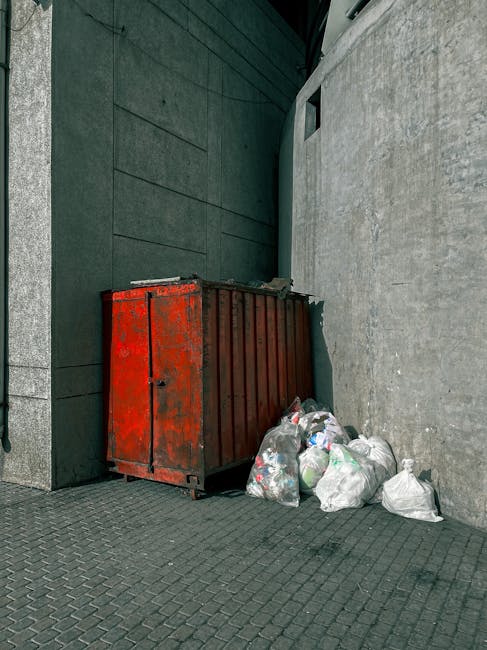
Commercial Waste in Egham

Commercial waste in Egham needs a service that is organised, careful and clear about what can be removed from everyday business premises. We provide waste removal for offices, shops, workshops, hospitality sites and other commercial settings, with collections planned around the type of material being cleared and the space it comes from. The aim is straightforward: keep premises usable, reduce clutter, and move recyclable and non-recyclable waste through a sensible route.
Our service can support regular waste removal as well as one-off clearances, depending on what a business needs to move. Typical work may include office furniture, packaging, mixed rubbish, obsolete stock, fixtures, and other non-hazardous items that are no longer required on site. Where useful, we can help organise a fuller clearance so that separate categories of material are handled in a tidy, practical way rather than left to be sorted piecemeal.
If you are comparing options, start by identifying what kind of waste you have and how quickly it needs to go. A clear list of items makes it easier to plan the right collection and avoid unnecessary delays. You can also request a quotation once you have a basic picture of the materials, access and volume involved.
Business waste removal for regular and one-off clearances
Business waste removal is often about routine, repeatable organisation rather than dramatic clear-outs. For many premises, the most useful service is one that can deal with accumulated rubbish, packaging and unwanted items without disrupting trading more than necessary. We can support clearances for business areas that need to stay presentable, practical and easier to manage from day to day. The right approach depends on the mix of waste, how it is stored and whether the collection is part of a larger tidy-up.
For offices, the scope can extend beyond simple bagged rubbish. Desks, chairs, shelving, filing units, small electrical items, storage containers and mixed general waste may all need to be handled together. Where the work is part of an internal move or refresh, the removal plan should fit around what is staying in place. Office clearance is a useful option when the objective is to empty or reduce the contents of a working area rather than just take away loose rubbish.
How different waste streams are managed

Commercial waste is rarely all the same material, which is why the sorting stage matters. Recyclable card, plastic wrapping, metal items, timber, furnishings and general refuse may all be present in one location, especially after a refit or stock change. The cleaner the separation, the easier it is to decide what needs special handling and what can go into standard removal routes. A practical collection should take account of the contents rather than treating every load as identical.
Some sites also produce specialist waste that should be treated carefully, such as fridges, appliances or items containing sensitive components. In those cases, the collection plan needs to reflect the item type rather than assuming it can be lifted and discarded like ordinary rubbish. For a wider commercial or premises-based clearance, waste removal can be part of a broader service where mixed non-hazardous material is taken away in a structured way.
Useful preparation usually stays simple. If possible, keep similar items together, note anything awkward or heavy, and make access to the collection point as direct as you can. A short written inventory is often enough for planning, especially when several rooms or storage areas are involved. That kind of preparation supports a more efficient collection without requiring the customer to carry out detailed sorting in advance.
Office, stockroom and back-of-house clearances
Commercial premises often need more than a basic rubbish pick-up. Back-of-house rooms, stock areas and office spaces can fill with redundant furniture, broken fixtures and surplus materials that reduce usable space. We handle these kinds of contents as part of a commercial waste service, taking care to remove items in a way that suits the layout of the premises. The work may be concentrated in one room or spread across several separate areas.
Where a business is changing what it stores on site, the clearance may include mixed items from different departments. Old monitors, packaging, filing cabinets, promotional material, shelves and non-hazardous stock can create a load that needs planning before removal begins. Business waste removal is especially relevant when the requirement is broader than one room and the customer wants a single organised collection rather than several disconnected visits.
Furniture, fixtures and heavier items
Commercial clearances often include bulky furniture that needs more than simple lifting. Desks, tables, chairs, cabinets, reception units and display items can all become unwanted when a layout changes or a lease ends. The practical issue is not only size but also how each item is moved through stairwells, corridors, doorways and shared access points. Careful removal helps reduce disruption and keeps the work orderly for other occupants or visitors.
Some items are best dealt with as their own category because they are awkward, heavy or made from mixed materials. Furniture dismantling may be useful when access is restricted or when larger pieces need to be made easier to carry. For customers dealing specifically with bigger household-style pieces in a commercial or mixed-use setting, furniture disposal can be a practical route for removing individual items without waiting for a full room clearance.
It is also worth deciding early whether items are being removed from an upper floor, a basement or a shared building. Those details affect the time needed for the job and the way the load is moved. A clear note about entrances, lifts, parking and loading points helps the collection proceed more smoothly and avoids avoidable back-and-forth on the day.
Recycling, reuse and responsible disposal
Not every item within commercial waste should be treated in the same way, and the disposal route matters. Some loads contain recyclable materials that can be separated from general refuse, while others contain large items that need specialist treatment before final disposal. A good commercial waste service should make those distinctions as part of the process rather than leaving the customer to guess what is appropriate. That is especially useful when a premises contains a mixture of packaging, furniture and legacy equipment.
Where businesses want a clearer view of how waste is handled, it helps to look at the underlying disposal and sorting approach as well as the collection itself. Recycling and sustainability gives a natural place to explain how reusable or recyclable material is considered alongside ordinary waste, while still keeping the focus on practical removal rather than abstract policy. The point is to make disposal more understandable and more consistent.
About Egham
Egham is a town in Surrey with a long history tied to the River Thames, the surrounding low-lying landscape and the nearby settlements that have grown up around transport and education. It lies close to the river meadows at Runnymede, a site strongly associated with the sealing of Magna Carta in 1215, and that connection gives the area a place in English constitutional history. The town developed from an older settlement pattern centred on the parish church and the main route westwards, with the road network continuing to shape its character over time. Today Egham sits within the Borough of Runnymede and retains a mix of town-centre commerce, residential streets and institutions connected with nearby Staines and the wider Thames corridor. Strode Street and the High Street show the more compact urban core, while the surrounding area includes more open stretches towards Englefield Green and the meadows by the river. Royal Holloway, University of London, is one of the best-known landmarks nearby, with its striking Founder's Building adding a distinctive silhouette to the local landscape. The town also has rail links on the Waterloo line, which has long strengthened its connection to London and the western commuter belt. Egham's identity combines local history, education, river scenery and a practical town-centre layout, making it a place where older historic associations sit alongside everyday shopping, travel and community life.
Household-style clearances for mixed premises
Some commercial settings generate waste that looks more like domestic clutter than standard business rubbish. Small landlords, managed accommodation, shared offices and premises with residential-style rooms can all produce mixed loads that include soft furnishings, bags of miscellaneous items, kitchen pieces or general bric-a-brac. In those situations, the collection still needs to be handled in a commercial framework, but the contents may call for the same careful sorting and bulky-item lifting seen in a house clearance.
Where that overlap is the main issue, it can be useful to consider house clearance as a descriptive route for understanding how larger mixed contents are taken away in an organised way. The important point is not the label alone, but whether the clearance covers the full mix of items being stored, removed or left behind after a change in use. We can then plan the work around the actual contents rather than forcing them into an unsuitable category.
What a quotation usually depends on

Commercial waste quotations are usually shaped by a small number of practical factors. The volume of material matters, as does the type of waste, the accessibility of the collection point and whether any items need careful handling or separation. If several areas are involved, the route through the premises may also influence the plan. The more precisely the load is described, the easier it becomes to produce a realistic quotation for the work.
Simple information is usually enough to begin. A list of the main items, a rough idea of how much space they take up and a note about access can be very helpful. If the job involves standard business rubbish rather than a specialist item type, the plan can often stay straightforward. If you want to compare the scope first, you can ask for a quotation after noting the items that need to be removed.
When the collection involves sensitive materials, mixed furniture or items that may need separate treatment, it is sensible to mention that from the outset. That keeps the quotation aligned with the actual work and avoids assumptions. For customers who prefer to look through pricing-related information before sending details, pricing and quotes is a natural page to review alongside the main service.
Loose rubbish, packaging and routine business tidy-ups
Not every collection involves a full room or a full office. Many commercial waste jobs are about the steady build-up of packaging, broken fixtures, obsolete paperwork boxes and mixed rubbish that no longer has a place on site. This kind of work is often best handled before it spreads across multiple rooms or becomes difficult to store safely. A routine clearance can make a premises feel better organised without requiring a major disruption.
Where loose waste is the main concern, the service should remain practical and direct. The collection may be focused on one storage area, a yard, a back room or a shared refuse point that has become too full for normal use. If confidential material is involved, separate handling may be required, so it is worth considering confidential shredding as a distinct support service when paper records or sensitive documents form part of the job.
Bookable support and final arrangement details
The easiest way to organise a commercial waste collection is to define the main waste types, the location of the items and any access issues that could affect loading. If the job is part of a move, refit or clearance, it can also help to say which items are staying so that removal work does not interfere with what needs to remain in place. Book online is a straightforward option for starting that process when a business is ready to move ahead.
Other useful details can include whether the collection is from a ground-floor area or an upper level, whether there is parking nearby and whether the waste has already been grouped together. These points do not need to be overcomplicated; they simply give enough context for planning. If any specialist item is present, mention it separately rather than mixing it into the general description, because that helps keep the quotation accurate and the collection appropriate to the contents.
For a direct request, send the item list and access details together and request a quotation once you are happy that the scope is clear. That is usually the most efficient way to match the service to the waste on site and keep the next step simple.