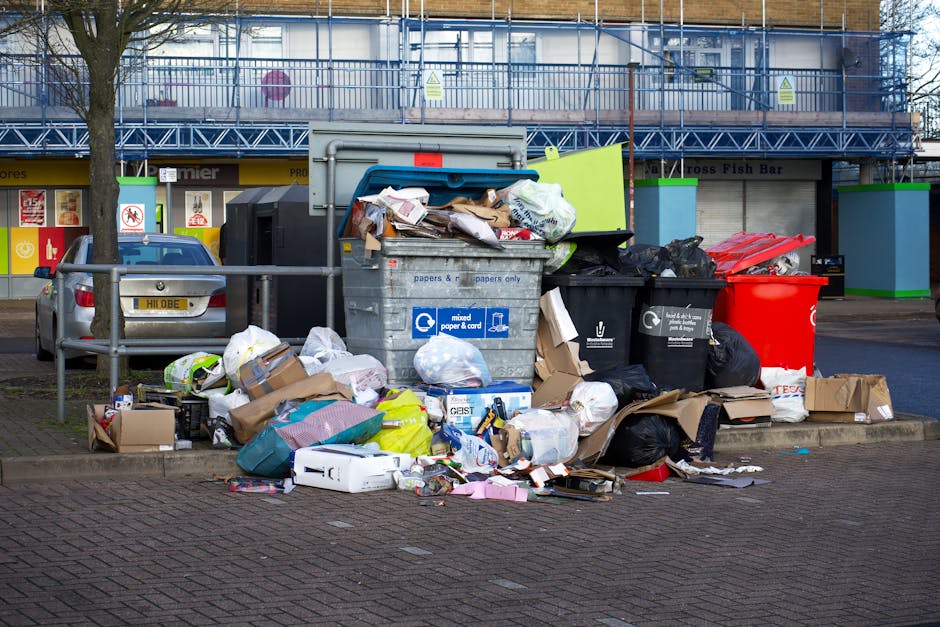
Avoid hidden rubbish removal charges in Egham what to know

If you are trying to sort out a clearance in Egham, the last thing you want is a bill that suddenly grows legs. Hidden rubbish removal charges are frustrating because they often show up after you have already committed, maybe when the van is outside, the team has started loading, and you do not feel like arguing on the driveway. This guide explains what to look for, how pricing usually works, where extra fees tend to appear, and how to protect yourself before you book. The aim is simple: help you avoid hidden rubbish removal charges in Egham what to know, without turning the whole process into a headache.
Truth be told, most bad experiences come from rushed quotes, vague descriptions, or assumptions on both sides. That is fixable. With a bit of know-how, you can compare providers properly, ask the right questions, and understand what a fair quote should include.
- Why this matters
- How rubbish removal pricing works
- Key benefits of a transparent quote
- Who needs this advice
- Step-by-step guidance
- Expert tips
- Common mistakes to avoid
- Tools, resources and recommendations
- Compliance and best practice
- Options and comparison table
- Real-world example
- Practical checklist
- Conclusion
- Frequently asked questions
Why Avoid hidden rubbish removal charges in Egham what to know Matters
Hidden charges are not just annoying. They can change the entire value of a clearance job. A quote that looks sensible at first glance can become expensive once the provider adds waiting time, access fees, labour surcharges, disposal extras, or special-item charges. That matters even more if you are clearing a flat, office, loft, garage, or garden where access can be awkward and the waste mix is not obvious from the street.
In Egham, as in most busy towns, people often book a clearance because they need the space back quickly. Maybe you are moving out by Friday, maybe a builder has just left a pile of debris, or maybe the spare room has quietly become a museum of broken furniture. No judgement. But urgency is exactly when hidden rubbish removal charges can slip in.
Being careful upfront protects more than your wallet. It also helps you compare providers on a like-for-like basis. A truly transparent company should make it clear what is included, what is excluded, and what might change the price. If they cannot explain that in plain English, that is a yellow flag at best.
Expert summary: The safest way to avoid surprise costs is to describe the waste accurately, ask for the full pricing structure before booking, and confirm any likely extras in writing. Simple, but it works.
If you want to understand the wider service behind a clean, professional clearance, it can also help to review the company's pricing and quotes information alongside its waste removal service approach. That gives you a better feel for how the business handles transparency, security, and expectations before the van even turns up.
How Avoid hidden rubbish removal charges in Egham what to know Works
Rubbish removal pricing usually works in one of a few ways. The provider may quote based on load size, item type, labour required, or a combination of all three. Some companies give a fixed estimate after photos or a description, while others confirm the final amount once they inspect the waste on arrival. Either approach can be fair, but only if the rules are made clear before the job starts.
The main thing to understand is that the final price often depends on risk. If a provider thinks a job could take longer, require more lifting, need special disposal, or involve difficult access, they may build that into the quote. That is not a hidden charge if it is explained. It becomes a problem when the customer only hears about it after the team is on site.
Common pricing triggers include:
- More waste than described
- Heavy or awkward items
- Stairs, long carries, or parking restrictions
- Restricted access through narrow hallways or tight doorways
- Materials that need separate handling, such as appliances or hazardous items
- Extra labour for dismantling, sorting, or bagging
A sensible provider will usually explain whether the quote covers only collection, or collection plus labour, disposal, and sorting. That distinction matters a lot. For example, a straightforward garage clearance is not the same as removing a cramped loft full of mixed items, old boxes, and a sofa that somehow got upstairs years ago. If you are dealing with furniture specifically, the process can be simpler when you look at dedicated pages like furniture clearance or furniture disposal, because the service can be tailored to the item type.
One practical detail people often miss: the more exact your description, the less room there is for disagreement. A few clear photos, a list of bulky items, and a note about access can save a lot of back-and-forth. Honestly, it saves time for everyone.
Key Benefits and Practical Advantages
When pricing is clear from the start, the benefits go beyond avoiding a nasty surprise on the invoice. You get a calmer booking process, quicker decisions, and better value comparisons between providers.
Here is what that looks like in real life:
- Better budgeting: You know what to set aside before the job is booked.
- Less stress on the day: No awkward pricing conversations while the team waits at the kerb.
- Faster scheduling: Clear details mean fewer follow-up calls.
- Fairer comparisons: You can compare similar quotes properly instead of apples and oranges.
- Lower dispute risk: Written clarity reduces confusion later.
There is also a quality signal here. Transparent pricing usually reflects a more organised service overall. Not always, of course, but often enough to matter. A business that explains its quote structure clearly is usually more confident about how it works. That confidence is useful to you, especially if you are arranging a larger clearance such as a house move, office clear-out, or builder's waste collection.
If your job involves a workspace, it can be worth checking a provider's office clearance or business waste removal services. Commercial jobs often have different access, paperwork, and disposal needs, so a general quote is not always enough.
And yes, sometimes the best benefit is simply peace of mind. You pay what you expected, the space gets cleared, and you move on with your day. A rare joy, but a real one.
Who This Is For and When It Makes Sense
This guidance is useful for just about anyone booking rubbish removal in Egham, but it is especially relevant if you are dealing with one of these situations:
- You need a one-off clearance and do not use the service often
- You are comparing several quotes and want a fair basis for comparison
- You have bulky or mixed waste and are unsure what affects the price
- You are clearing a property after a move, refurbishment, or tenancy change
- You need to dispose of items that may carry extra handling costs
- You want to avoid any debate about "that was not included" on the day
It also makes sense if you are planning a clearance with several moving parts. A loft clearance can involve old suitcases, bags, toys, and random bits you forgot existed. A garden clearance may include soil, branches, and broken pots. A builder's waste job can involve rubble, timber offcuts, plasterboard, and packaging. Each of those has slightly different pricing pressure points.
For example, if your clutter is tucked away in storage spaces, it may be helpful to look at loft clearance, garage clearance, or home clearance depending on where the work is happening. Matching the service to the job can reduce the chance of add-ons later.
Let's face it, the person booking the job usually just wants the pile gone. That is fair. But the clearer the starting point, the easier it is to keep the final invoice tidy.
Step-by-Step Guidance
If you want to avoid hidden rubbish removal charges in Egham what to know, the best approach is to handle the booking like a proper mini-project. Not dramatic. Just organised.
- List everything that needs removing. Be specific. "Old furniture" is too vague. "One three-seater sofa, one wardrobe, eight black bags, and a broken desk" is better.
- Note the access conditions. Mention stairs, no lift, narrow hallways, long driveways, parking limits, or gated entries. Access is a common cause of extra labour charges.
- Share photos if possible. Good photos reduce guesswork. Take them in daylight if you can; the detail is much easier to judge.
- Ask what the quote includes. Does it cover loading, disposal, labour, VAT if applicable, and any sorting? Get the details before you book.
- Ask what might change the price. Special items, extra volume, difficult access, or additional labour should be explained in advance.
- Check whether specific items need separate handling. Appliances, mattresses, sofa disposal, or other specialist waste can have different pricing structures. If you are dealing with a bed or sofa, see the dedicated mattress and sofa disposal page for the sort of service that may be more suitable.
- Confirm the booking terms. Read the quote notes, cancellation rules, and payment expectations so nothing catches you off guard.
- Keep a written record. Save emails or messages that confirm what was agreed. It is boring, yes, but very useful if a question comes up later.
A small but important tip: if you are unsure about what can be taken together, ask before the team arrives. Mixed loads can be fine, but some items need different disposal routes. The same is true for awkward items like a fridge, freezer, or other appliance. In those cases, a page such as fridge and appliance removal may be more relevant than a general clearance.
If your job includes odd materials or higher-risk waste, do not try to wing it. Clarify the category first. That one question can save a lot of grief.
Expert Tips for Better Results
Here are the practical habits that tend to make the biggest difference. These are not flashy, but they work.
- Describe the job from the street level and the storage level. What looks like "a small pile" in one room can be much more substantial once it is all gathered together.
- Ask whether the quote is fixed or estimated. Fixed pricing is easier to manage. Estimated pricing is fine too, but only if you understand what moves it up or down.
- Check if dismantling is included. A wardrobe that needs taking apart is a different job from one that is already flat-packed.
- Be realistic about time. If a clearance is likely to take longer than expected, say so early.
- Keep bulky-item lists separate from bagged waste. It helps the provider price the job more accurately.
- Use service pages as a guide to scope. For example, builders waste clearance is a better fit for construction debris than a general household clearance.
One thing we often see is people underestimating how much waste is actually there. It happens all the time. A pile of bits in the corner becomes three pile after sorting, and then suddenly the quote looks "wrong" when in fact the estimate was based on incomplete information. That is not always anyone's fault, but it is avoidable.
A final note here: if a price looks too good to be true, ask why. Sometimes it is just a lean operation. Sometimes it is because the extras are waiting quietly in the background. Sneaky little things, those extras.
Common Mistakes to Avoid
Most hidden charge problems come from a handful of common mistakes. Avoid these and you are already ahead of the game.
- Giving a vague description. "A few bits and pieces" is not enough for a proper quote.
- Forgetting access issues. Stairs, parking restrictions, and long carries can all matter.
- Not asking about special items. Mattresses, appliances, hazardous items, and certain mixed materials can change the price.
- Assuming labour is included. It often is, but not always.
- Assuming the first quote is the full quote. Ask what might be added later.
- Not checking the service scope. A clearance quote is not the same as a disposal-only quote.
- Leaving everything until the last minute. Rushed bookings usually create more scope for confusion.
There is a simple rule of thumb: if you would struggle to explain the job to a friend over the phone in one minute, it probably needs more detail before it is priced properly. That sounds obvious, but it helps.
Also, do not forget the paperwork side. Some providers have clear terms and conditions and a simple complaints procedure. Those pages are not exciting reading, admittedly, but they tell you how issues are handled if something does go wrong.
Tools, Resources and Recommendations
You do not need fancy software to manage a rubbish removal booking well. A phone camera, a notes app, and a bit of honesty are usually enough. Still, a few simple tools make life easier.
- Photo set: Take a wide shot of the whole area and a close-up of any awkward items.
- Item list: Write down what is going, what is staying, and what needs dismantling.
- Access note: Mention floor level, lift access, parking, and any tight turns or narrow entrances.
- Quote folder: Save emails, messages, or screenshots in one place.
- Service matching: Use the right page for the job, such as furniture disposal, garden clearance, or house clearance depending on the type of waste.
If you are interested in how a provider handles money and customer safety, it can also be useful to read about payment and security and insurance and safety. Those pages do not replace a proper quote, of course, but they can strengthen confidence that the business is set up properly.
For clients who care about where waste goes after collection, a page like recycling and sustainability can be helpful. It gives a better sense of whether items are likely to be sorted responsibly rather than simply tipped and forgotten. And that matters, especially if you are clearing a lot of reusable material.
Law, Compliance, Standards, or Best Practice
When rubbish removal is handled properly, there is usually a mix of legal duty, safety practice, and common-sense procedure behind it. You do not need to become an expert in waste management law, thankfully, but it helps to understand the basics.
In the UK, waste must be handled by people and businesses that are allowed to do the work, and it should be managed in a way that is safe and environmentally responsible. If a provider is vague about how waste is removed, transported, or disposed of, that is worth pausing over. You do not need alarm bells, but you do need clarity.
Best practice usually includes:
- Clear written quotes
- Honest item descriptions
- Appropriate handling of special waste
- Safe loading practices
- Transparent terms if the scope changes
- Respect for access, building rules, and site safety
If a property has unusual access, delicate surfaces, or risk factors, the provider should factor those into the job carefully. That is particularly true for commercial sites, where timing, security, and shared access can complicate things. A reputable operator should also be open about how it handles sensitive or regulated items, such as documents or potentially hazardous waste.
If you are booking a larger commercial clearance, it is sensible to check related pages like confidential shredding or hazardous waste disposal where relevant. Those topics need a more careful approach than a standard mixed-waste job, and it is better to clarify them early than deal with it later.
Options, Methods, or Comparison Table
Different clearance options suit different situations. The right choice depends on how much waste you have, what type it is, and how quickly you need it gone. Here is a simple comparison to help you think it through.
| Option | Best for | Risk of hidden extras | Notes |
|---|---|---|---|
| General rubbish removal | Mixed household or light commercial waste | Medium | Needs clear item descriptions and access details |
| Specialist item disposal | Appliances, sofas, mattresses, or similar bulky items | Lower if described well | Good when the waste type is obvious and listed upfront |
| Room-specific clearance | Lofts, garages, flats, offices, or whole rooms | Medium to high | Access and labour are often the main pricing drivers |
| Builders waste clearance | Rubble, timber, plasterboard, and renovation debris | Medium | Weight, volume, and material type can affect the quote |
| Pre-booked online collection | Customers who want a structured booking process | Lower when details are accurate | Good for planning, as long as the quote terms are clear |
In many cases, the cheapest quote is not the best quote. What you want is the quote that is most complete. That sounds a bit dull, but dull is excellent when you are paying an invoice.
Case Study or Real-World Example
A local customer in Egham needed to clear a two-bedroom flat before a move. The job looked simple at first: one sofa, a mattress, a desk, several bags, and a few bits of old shelving. Over the phone, it sounded like a quick collection. Once the customer checked the storage cupboard and hallway, though, there were extra items tucked away in boxes, plus a wardrobe that needed dismantling before it would fit through the stairwell.
Because the customer had sent photos and asked what could change the price, the provider was able to explain the likely extras before the booking was confirmed. The final job still cost more than the first rough estimate, but there was no surprise. No awkward moment at the door. No "we didn't know about that" conversation. Just a clear agreement and a straightforward clearance.
That is really the point. The service did not become cheaper by magic. It became honest by design.
Another example: a small office in the area needed to remove old filing cabinets and boxed archive material. Once the business checked the details, it realised that confidential papers needed separate handling and that the load also required careful access through a narrow shared corridor. Again, the price was adjusted before the job, not after. Much better for everybody.
Practical Checklist
Use this checklist before you confirm any rubbish removal booking in Egham.
- Have I listed every item that needs removing?
- Have I included bulky, heavy, or awkward items?
- Have I explained stairs, lifts, parking, and access restrictions?
- Have I asked whether labour and disposal are included?
- Have I checked whether special items carry extra charges?
- Have I sent photos if the job is hard to describe?
- Have I confirmed whether the quote is fixed or estimated?
- Have I read the booking terms carefully?
- Have I saved the written quote or message trail?
- Have I matched the service to the actual waste type?
If you can tick all of those off, you are in a strong position. The booking should feel clearer, calmer, and much less like a gamble.
And if you are still not sure, take ten minutes, go back through your notes, and add the missing detail. That small pause can save you a proper faff later.
Conclusion
Hidden rubbish removal charges are usually avoidable once you know where they come from. The main ingredients are clarity, preparation, and a willingness to ask one or two direct questions before the job is booked. If you describe the waste accurately, explain access properly, and confirm what is included, you will dramatically reduce the chances of a surprise bill.
For most people in Egham, that means a smoother clearance, better value, and less stress on the day. Which, let's be honest, is the real win here. You do not need to become a pricing expert. You just need enough knowledge to spot vague quotes and turn them into clear ones.
When you are ready to compare options, review the service details, check the pricing notes, and choose the provider that answers your questions plainly. That is usually the best sign you are dealing with a company that respects your time as well as your money.
Get a free quote today and see how much you can save.
Sometimes the smartest thing you can do is ask one more question before saying yes. It keeps things simple, and simple is good.
Frequently Asked Questions
What causes hidden rubbish removal charges most often?
The most common causes are vague descriptions, access difficulties, extra labour, and special items that were not mentioned at the start. A clear quote usually depends on complete information.
How can I tell if a quote is genuinely transparent?
A transparent quote should explain what is included, what is excluded, and what could change the price. If the provider can answer those points clearly, that is a good sign.
Should I send photos before booking rubbish removal in Egham?
Yes, if you can. Photos help the provider judge volume, access, and item type more accurately. A quick photo set is often better than a long description.
Do bulky items always cost extra?
Not always, but they often affect the price because of lifting, dismantling, or disposal requirements. Sofas, mattresses, and appliances are common examples.
Is labour usually included in rubbish removal quotes?
Sometimes yes, sometimes no. That is why it is worth asking directly whether loading, carrying, and disposal are all part of the price.
What should I ask before booking a clearance?
Ask what the quote includes, what might change the cost, whether the price is fixed or estimated, and whether there are any special handling charges.
How do access issues affect the final bill?
Stairs, no lift, tight corridors, parking limits, and long carries can all increase labour time. If access is awkward, mention it early so the quote reflects reality.
Are online bookings safer for pricing?
They can be, if the booking form captures enough detail and the final terms are clear. Online booking is only useful when the information requested is specific enough.
What if my waste includes a mix of furniture and general rubbish?
That is very common. Just list the items separately if you can, because mixed loads are easier to price accurately when the provider knows exactly what is there.
Can I avoid surprise charges by choosing the cheapest quote?
Not necessarily. The cheapest quote is not always the best value if it leaves out labour, disposal, or access issues. A fuller quote is often the safer choice.
When should I use a specialist service instead of general rubbish removal?
Use a specialist service when the waste type is obvious or needs particular handling, such as appliances, hazardous items, office shredding, or bulky furniture.
What is the best next step if I want a clean, no-surprises booking?
Write down the items, take photos, explain access, and ask for a detailed quote before confirming. That small bit of preparation makes a big difference.